Saturday, May 05, 2007

Cinco de Mayo


I feel like maybe I should preface this with the fact that I did absolutely nothing today I have no Mexican heritage to celebrate, but I do love to sit at home and dream of mexican food. Instead of looking up and learning about regional classics I decided these dishes would be appropriately delicious and deliciously tacky.

I finally gave in to the bottles of pomegranate juice placed in strategic promotional positions throughout the local market which in turn led to the pomegranate margarita. Not Mexican at all but it tasted good. I thought if I were to celebrate this holiday this is what I'd like to make today. Veracruz snapper would be great, but I wanted to keep it simple and not ruin it with a real Mexican dish.

Cinco de Mayo Menu

Pomegranate Margaritas

Crabcake with Pumpkin Seed Sauce

Smoked Pork Tamales with Apricots

Banana Mousse with Cumin and Mexican Chocolate


Pomegranate Margarita

puree pomegranate juice, pomegranate molasses, lime juice, triple sec ice and fresh mint. Serve immediately


Crabcake with Pumpkin Seed Sauce

prepare a crabcake with brunoise, celery, red and yellow pepper and chopped cilantro.

onions
garlic
red jalepeno
vermouth
chili de arbol, rehydrated
tomato paste
cilantro stems
pumpkin seeds
oil
salt
chicken stock

Toast pumpkin seeds in the oven and allow to cool. Grind in a spice grinder to make a pumpkin seed flour. Reserve.

Sweat onions in oil 5 minutes. Add garlic and chilis 2 min. Add tomato paste and cook another 2 min. Add vermouth and reduce au sec. Add pumpkin seed flour and cook 1 minute. Add chicken stock and bring to a simmer. Make more roux with the pumpkin seed if the sauce is not thick enough. Strain and serve.
prepare a crabcake with brunoise, celery, red and yellow pepper and chopped cilantro.

Banana Mousse with Mexican Chocolate

1 mexican chocolate tableta, highest quality
2 bananas, ripe
1/2 tsp fresh ground cumin seed
1 T chopped toasted peanuts
1 T banana liquer
ground unsweetened, un-alkalized cocoa powder
small bit of fresh vanilla bean scrapings or tiny bit of vanilla extract
1 cup heavy cream
1/2 sheet gelatin
salt


Bloom the gelatin in cold water. Add the gelatin and stir until dissolved. Heat 2 Tbs of water until very hot. Dissolve the gelatin in the water and cool slightly. Puree the banana and banana liquer with the gelatin water and a pinch of salt.

whip the cream to nearly stiff peaks. Fold a third of the banana puree into the whip cream. Slowly fold the rest of the banana into the cream in installments. Serve right away or refrigerate.

Crumble mexican chocolate pieces over the mousse.


Monday, April 30, 2007

Pork with Green Apple Curry


This is a really easy dish made with little effort. I took bone-in pork chops about 3/4" thick and removed the rib section. I seared the chops and the rib pieces. Added some onion, green apple and few pieces of red pepper. Deglazed with about a cup of white wine. Braise for about an hour and a half until the meat is tender. Add the chops back in and cook through, another 5-10 minutes. Degrease and stir in about 2 Tbs of curry paste and bring to a boil.

curry paste:
1 medium onion diced
6 cloves garlic, minced
3 Tbs oil
3-4 Tbs curry powder

Sweat the onions 10 minutes and add garlic for another 10 or until garlic is cooked thoroughly. Add the curry powder and cook until it starts to smell nutty and fragrant. Puree in a blender, adding water as necessary. If you want to make a curry oil or vinaigrette it would be best to toast the spices in the oil and puree all of it together before straining.

Sunday, April 15, 2007

Extracting Essences

(picture coming soon)

Living in Hyde Park, I suddenly have way too much of two things I never had in the city; time and space. I recently moved into an apartment following my dutiful return to CIA. Since then I've also been able to do something else I never could in the city; cook. The school's resources provided an easter weekend feast, which proved therapeautic, even in the midst of a chaotic move. Despite the havoc the move has wrought on my bank account I could still swing for the $2 a pound strawberries the local market had on special. It seemed like a good deal even though the price reflects the quality.

I tried making jam using a different technique. I cleaned and quartered the strawberries and crammed them into a pyrex bowl, covered with a tight fitting waterproof lid. I then put the bowl into a pot of cold water - about half submerged - and brought it up to a boil for about 40 minutes. I wasn't really sure what affect this would have. I guess I assumed it would cook the berries slowly and I would open the container to find a rich viscous preserve. This is not what happened. When I opened the container the strawberries were gray and lifeless floating in a pool of rich syrupy liquid. This process had somehow pulverized the berries causing them to give up everything except their cell structure. The liquid tasted amazing and was very clean and free of solids. It was like a pure extract of strawberry. If you were to freeze and thaw the berries it would have a similar result to a lesser extent. I don't really know what to do with it, but it's exciting. I reduced some down and poured it over pancakes. If I had an ice cream maker it might make for a good sorbet.

I remember reading about this in an excerpt of On Food and Cooking. Mcgee has a passage from the medieval chef Taillevant. He describes using this method to extract juices from meats to make jelly for invalids. It's exciting to think about the potential. Is it possible this technique would have the same results with anything, animal or vegetable? I'm going to play with it more.

Now here's a recipe for Pickled Ramps cause spring has sprung and these are delicious.

1# ramps
1 cup good apple cider vinegar
1 cup water
2 1/2T sugar
1T salt

Clean the ramps. Trim and discard the leaves and root ends. Wash thoroughly in water and dry. Bring the water and vinegar to a boil. Add the salt and sugar and stir to dissolve. Taste the pickling mixture to make sure it's delicious. Put the ramps in a jar or whatever container will be used to store them. Pour the hot pickling liquid over and cover. Let the ramps steep 10-15 minutes and refrigerate. Let sit for at least 24 hours. Great for sandwiches and salads.

Easter Weekend Dinner

Clams David
steamed in a bouillabaisse broth with bread

Cold Asparagus Salad

Mustard Dressing, Poached Egg, Pecorino Toscano

Fresh Pasta with Wild Mushrooms


Grouper Two Ways:
lightly cured with a blood orange reduction and sauteed with a chervil sauce

Top Round of Lamb Roasted with Herbs and Garlic

warm fava bean salad with mint vinaigrette

Strawberry Pie with Chantilly

Friday, March 23, 2007

Braised Hake with Red Pepper and Green Onion


1 ½ pounds skinless hake filet, portioned
½ white onion, diced
2 stalks celery, thinly sliced
1 jalepeno, minced
1 bunch green onions, cut into 2” lengths
1 red pepper peeled and diced
1 fresh bay leaf
4 cloves garlic, thinly sliced
3 T olive oil
2 T tomato paste
1 tsp cayenne pepper
1 tsp paprika
1 cup chardonnay
2/3 cup dry sherry
2 ½ cups good fish stock
1-2 T sherry vinegar
salt and pepper
2# white potatoes, cut into cubes

Preheat oven to 350. Toss the potatoes with salt, pepper and olive oil. Roast until tender.

Sweat the onion in olive oil until softened, about 5 minutes. Add garlic, jalepeno, celery, bay leaf and sweat 5 minutes. Add the spices and cook 1-2 minutes. Add the tomato paste and cook until rusty colored about 2 minutes. Add the white wine and sherry and reduce until sauce is very thick. Add fish stock and bring to a boil. Simmer 10-15 minutes. Check for seasoning. Strain vegetables and discard, or leave in if you want that. Add sauce pack to a large saute pan and bring to a boil. Add the hake, green onions and red peppers. Braise until hake is cooked through, about 10 minutes. Finish with sherry vinegar and a little olive oil. Serve immediately over potatoes.

Sunday, January 14, 2007

Happy New Year Message


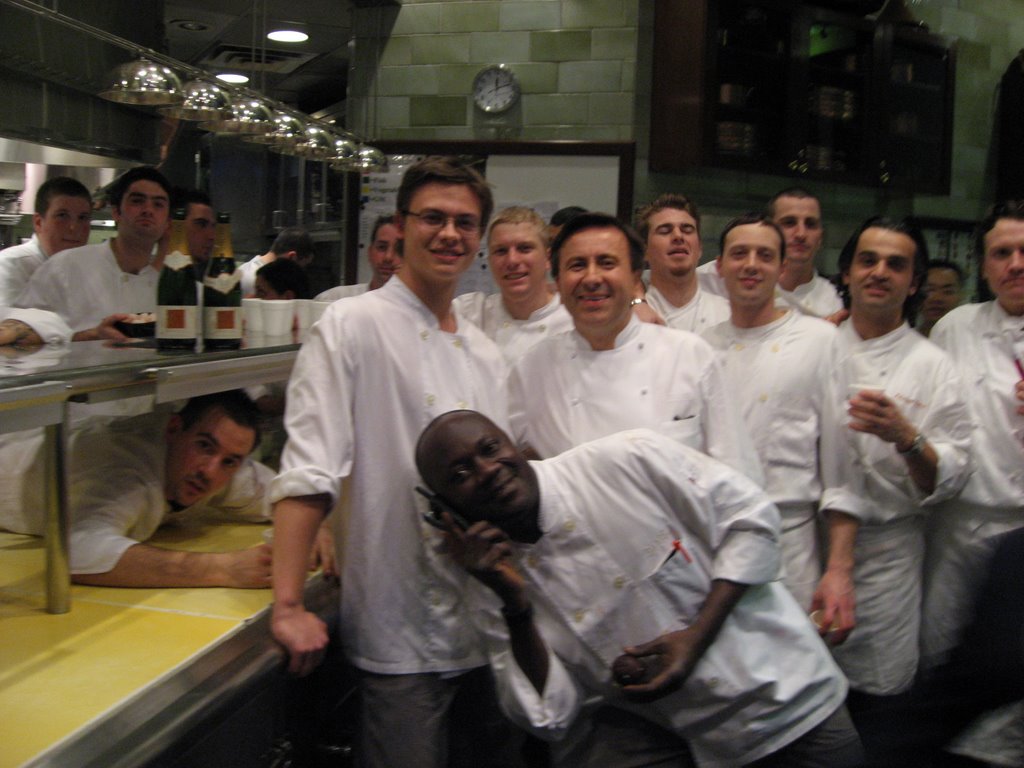
The kitchen staff of Daniel and I wish the Sandwich Cult a happy new year. I've learned much after a few months of adventure in the culinary mecha of new york city. I will dutifully share the tips, secrets, joys and dissapointment of this exceptional reality.

I'm trying to turn this blog into a more accessible publication. Hopefully this process will be finished sometime before spring. It should be kicked off by a short series on my experience of total immersion in haute cuisine, which has - to say the least - changed my life. Until then there will likely be more gaps in publication.

Tuesday, September 19, 2006

Escape to Foodopolis


Every once in awhile a train leaves to a place where lost recipes are remembered, but no one has ever returned from foodopolis - except me.

This post is as belated as it is important. This is also being dedicated to Gabe who's suffering culinary oppression, in hopes that the spirit of improvisation and creation of great food will transcend him. A few weeks back I was invited by David and Sarah to partake in one of my most interesting and satisfying culinary adventures. The evening started at 8 and went until around one. Food was being prepared and served as it was finished, the gaps lubricated with an abudance of wine. I can't really take credit for any of the creations. Two highlights included a rustic mussel soup made with a chili paste, mussel broth and cream and a braised cod with onions and patty pan. I didn't pay close enough attention to the cod preparation, but this is what I remember. The food was original, delicious, inspired, simply beautiful.

I also want to take this moment - since my postings have been so few and far between - to mention some things I think are really cool.

Sourdough starter: it's a living that you bake into your bread. It can be sustained indefinitely and has flavor characteristic of geographic location due to the wild yeast - the air-oir.

Jean-Robert Pitte said in his book on french gastronomy, "The success of a gastronomic event owes as much to the appeal of sensations already familiar and known by heart as to the effect of surprise, novelty, exoticism in the raw materials, how they are used and the surroundings.

Jacques Pepin wrote about serving Indian diplomacy while he was chef for the head of state. He said he would not try to replicate traditional Indian dishes because the diplomat's own cooks could do that much better, obviously. However, he would sprinkle a little garam masala over the roast chicken. This is really minor, I just think it's an awesome diplomatic move.

Braised Cod Pierre

1# cod filet
onion, diced
fennel, diced
garlic, chopped
white wine
touch of cream
bacon and mushrooms
patty pan
sliced onions

Render the bacon in a sautoir and sweat the mushrooms in it. Set aside for another preparation. Drain out most of the rendered fat at add the onion, fennel and fennel, sweat until cooked slightly. Add the white wine and water, enough to poach in. Bring to a boil and place cod filet in the pan. Cover and place in a 350 oven until cooked tender, should not take long. Meanwhile sweat the onions and patty pans together in oil. Reserve. Remove the fish and reduce the cuisson slightly. Add a touch of cream to finish the sauce. Plate the fish with the onions and patty pan as a garnish, pour the reduced sauce over.

This dish is heavenly, easily the best preparation of cod I've ever seen.


Mussels in Adobo Broth

1# mussels
1/2 onion, sliced
1/4 fennel bulb, sliced
1 serrano chili, seeded and chopped
1 lime, juiced
1 cup dry white wine
3 cloves garlic, minced
~1 cup ancho-guajillo paste (recipe follows)
salt and pepper
1/2-1 cup cream
water as needed

Combine all ingredients except cream and mussels in a pot with a lid. Bring to a boil and cook 5-6 minutes. Meanwhile, rinse and clean the mussels. Add them to the pot and cover. Cook 5 minutes or until most of the shells have opened. Spoon the muscles into a serving bowl. Add the cream to the broth and bring to a simmer, cook 1-2 minutes. Pour the finished soup over the muscles. Garnish with fennel fronds.


Ancho-Guajillo Paste

8 grape tomatoes, halved
2 Tbs olive oil
2 ancho chilis, toasted and seeded
2 Guajillo chilis, toasted and seeded
1/4 cup white wine
2 tsp honey
salt as needed
juice of half a lime
2 Tbs chicken stock

Sweat the tomatoes in olive oil until softened. Add the white wine, chicken stock and chilis. Cook until the chilis are softened. Transfer to a blender and puree with the lime juice and honey. Mixture should be a thick paste that's very spicy and slightly bitter.

Sunday, September 10, 2006

Restaurant Daniel


last night was my second trail at the famed restaurant daniel. I wasn't working on the line. Highlights included one of the sous chefs picking up a piece of fat back I was dicing and popping it into his mouth. I was grinding meat when the bundle of bamboo skewers I was using to push the meat down got caught in the grinder. After failing to pull it out, we ran it through. At the end of the night Daniel said I was a shitty stagiere. However I was offered the extern position, whatever it may be. This is the actual kitchen.

Saturday, July 29, 2006

Waiting For Jadot


This is just to say

I have eaten the
plums
that were in
the icebox
and which you were probably
saving
for breakfast

Forgive me
they were delicious
so sweet
and so cold

William Carlos Williams

Monday, July 24, 2006

Summer Break


Sadly my summer break is coming to an end. I don't have much to say about it except all the stuff I cooked. I still have a week left, I don't know how much food I'm going to make. Amanda wants me to make a swirl of red and yellow roasted pepper soup for her. So far I made a

a soft-ripened cheese plate with a
Sweet Onion-Lemon Compote
Pickled Cherries
and a
Brut Grapefruit Bellini


I love bellini's and this one was perfect for the hot summer day. I added just a tiny amount of grapefruit juice with a grapefruit supreme in the glass, giving it a subtle hint of the fruit that was not in the least bit sweet. The cherries were sweet-pickled with rice vinegar, salt, water and sugar.

Sweet Onion-Lemon Compote
1 large sweet onion (walla walla, vidalia, texas 1015 etc.)
1 lemon
1/2 c. dry white wine
1 Tbs sugar
2 Tsp salt
fresh ground black pepper
4 Tbs butter

Julienne the onion. Cut off the peel including the white part. Small dice or julienne the lemon peel. Melt the butter in a medium saucepan. Sweat the onions, lemon peel, salt and sugar. DO NOT CARMELIZE. Add the white wine and cook covered 45-60 minutes until onions are very tender. It might be necessary to add more water from time to time.

Gnocchi with Braised Oxtail

Corriander-Apple Turkey Burgers with Carmelized Onions and Apricot Chutney
Spicy Garlic-Chicken Stir-Fry with Coconut Rice.
Sweet Potato-Vanilla Bean Souffle
Rotisserie Chicken with Walnut-Glazed Celeriac and Braised Kale
Tapenade Pizza with Smoked Tomatoes and Basil
Crème de Potage d'Aubergine

I had some fun with coconuts and bananas. Banana muffins with dark rum and chocolate chips were pretty good, but the baked banana pudding with a coconut whipped topping and ginger sorbet was better. This was inspired by a desert served at monsoon restaurant in nyc. The recipe is below.

I got a ton of apricots one day and made a Vanilla-Apricot Custard by poaching the apricots in a vanilla cream and pureeing it. I served this with a baked apricot, apricot marmalade and a scoop of almond ice cream on top. Idea courtesy of Daniel Boulud.

Recently I've been smoking a lot (food of course, jeez!). There were ups and downs.

Smoked Salmon with a Glaze made from Cognac and Figs
Smoked Sea Bass with Lemony Kalamata Tapenade
Smoked Scallops with a light Dijon-Mint Cream sauce
Smoky Salsa

Smoky Salsa:
5 medium sized vine-ripened tomatoes, blanched and peeled
1/4 sweet onion, sliced
2 Jalepenos, seeds and ribs removed
juice from 1/2 lime
1 Tbs chipotle with adobo
1 1/2 tsp tomato paste
2 cloves garlic, stem end removed

Smoke the tomatoes, onions, jalepenos and garlic. Add all ingredients to a food processor and pulse to desired consistency. Allow to steep in the fridge for a day before serving.

Banana Pudding with Coconut Topping and Ginger Sorbet

Banana Pudding
5 ripe bananas
1 cup heavy cream
3/4 cup brown sugar
3/4 cup dark rum
1 egg
5 egg yolks

Preheat oven to 275. Combine all ingredients in a large bowl. Corsely mash the bananas in the mixture. Pour into an appropriately sized baking dish. Cook until custard has set, about 45 min. Serve warm or room temp.

Coconut Frosting
1 can coconut milk
1 tsp dark rum
1 1/2 cups confectioners sugar

Allow the coconut milk to sit undisturbed so it separates. Carefully remove the thick cream without any of the water. Combine the coconut cream and rum in a stand mixer. Whip the sugar in until sweetened to desired amount. Refrigerate immediately.

Ginger Sorbet
1/2# ginger root
simple syrup
1 T light corn syrup
water

Peel the ginger and puree in a food processor with water as needed. Wring out the mixture using cheesecloth. Bring the mixture to a simmer in a small saucepan, skimming as necessary. Reduce the mixture slightly. You should have about half a cup. Add the corn syrup and simple syrup. Mixture should be very sweet. Chill thoroughly and churn in an ice cream maker.

To plate: Cut a square of the banana pudding out and cover with a layer of coconut frosting. Top with a scoop of ginger sorbet.


Tuesday, July 04, 2006

4th of July Casserole


I love casseroles, both the food and the dish. Some of the oldest and most delicious meals including stews and braises have come from the one-pot-dinner. Bechamel is one of my favorite sauces to add to unify a casserole. The sauce mornay used in this recipe is based on it. What could be more american than a casserole - throwback to the family values that america was all about in the 50's on the 4th of july. I'm not trying to tear down an institution like grilling on the 4th, I just thought it would be cool to make this dish. That and it sounded really good to me. I've seen variations of it in a lot of places but this is my version.


Shrimp and Tomato Casserole

1# shrimp P&D
1/2# large tubular pasta, cooked
2 cloves garlic
1-2T olive oil
1/4c. minced onion
1/2 large can whole tomatoes in puree
1/2c. gruyere, shredded, plus 2T
1/2c. white cheddar, shredded, plus 2T
1T butter
1T flour
1 1/2c. milk, half and half or cream
salt and pepper

If you happen to be using shrimp that are not peeled and deveined, reserve the shells. Simmer them in a pint of water for 30min. Strain and reduce down until very thick. Reserve this liquid for the casserole.

In a small saucepan heat the butter and sweat the onions until translucent. Add the flour and cook 5min. Slowly whisk in the cold milk and stir until thickened. Add the cheese a small amount at a time until the sauce is thick and cheesy. Season with salt and pepper. Strain or use as is.

Preheat the oven to 350. Heat the olive oil in a casserole. Add the onions and sweat until translucent. Add the garlic and cook another 2-5min. Meanwhile, crush and seed the tomatoes reserving the puree. Add the shrimp and stir just until they start to curl up and turn pink. Add the tomatoes and cook another minute. Add the cheese sauce and pasta and stir until incorporated. Add the shrimp reduction (if using) at this point and tomato puree if mixture is too thick. Place into a greased pan and sprinkle the remaining cheese over the top. Bake until the top is golden brown. Remove and allow to rest 20 min. SERVE

If you have to grill something and this is unacceptable for you, I've found a compromise.

Cheeseburger Casserole

mise en place for cheeseburgers:
buns
burger patties
onions, sliced thickly
pickles
tomatoes, sliced
2x cheese sauce from above
butter

grill the burgers and the onions and set aside. In a greased casserole place a layer of hamburger buns over the bottom. Place a layer of grilled beef patties over the buns. You do not have to be careful to line up the burgers. Layer the tomatoes, pickles and onions. Pour the cheese sauce over the top and bake in a 350 degree oven until cheese is golden brown. Serve.

Sunday, June 25, 2006

Satan Gave Me a Taco and it Made Me Kind of Sick


I'm stumbling home, battered from the excesses of food and drink after a weekend with Sara and David in Rhinebeck. The following menu speaks for itself.

Anti-pasti Plate
assorted cheeses, watercrackers, artisan bread, proscuitto, red pepper - kalamata tapenade

Asparagus Proscuitto Bundles
baked crispy and sprinkled with parmesan cheese

Mixed Green Salad
spicy anchovy-dijon vinaigrette made with champagne-shallot reduction

Oyster Mushroom - Chevre Ravioli
Served with a garlic brown-butter sauce

Champagne Scallops
Pan-seared with an orange black-pepper sauce

Berries and Cream
minty mascerated berries with hagen-daas vanilla ice cream


The ravioli was amazing but the scallops were the best. By the time we got around to the scallops we were so drunk we didn't know what garlic was going into what and what not; so the preparation is very simple but effective. If you get a good sear on the scallops the fond with give the sauce a beautiful deep orangish-brown color. You could make it more classical by adding a small amount of brown veal stock and shallots after the chamapagne is reduced.

Champagne Scallops

1# large sea scallops
olive oil for sauteeing
salt and corse ground black pepper
1 1/2 c. brut champagne
juice from 1/2 a large orange

Heat the oil over medium-high heat. Season the scallops and sear on both sides to a deep golden brown. Deglaze with the champagne and reduce to a medium nappe. Check for seasoning, strain if solids remain. Finish with the black pepper and orange juice. Serve immediately.

Oyster Mushroom- Chevre filling

4 oz cultivated mushrooms (we used oyster and cremini)
4 oz chevre
1/4c. brut champagne or dry sherry
2 large cloves garlic
2 Tbs minced white onion
2 Tbs chopped parsley
2 1/2 egg yolks
salt and pepper
olive oil

Chop the mushrooms by hand to a small mince. Sweat the oil in a medium-large pan over low heat. Cook about 5 minutes. Add the garlic and cook another few minutes. Add the mushrooms and wine and cook until all the liquid is reduced down. Season with salt and pepper. Remove from heat and allow to cool. Combine the mushroom mix, chevre and egg yolks in a mixing bowl.
We used and herbed store-bought chevre so you might want to add more garlic and misc chopped herbs if using a plain chevre. We also used wonton wrappers from the grocery store, but obviously it would be better with fresh pasta. I would suggest adding the chevre in small amounts to desired consistency because it can over power other flavors. This would make a great duxelle, you could roll it up in a ballotine or use it for stuffed peppers or portobello mushrooms. As far as other pastas go it would probably be a little too intense for a manicotti but it would make a badass veggie lasagna with some tomato sauce. You could do an haute french thing and stuff it inside a boneless chicken wing and use it as a garnish. It's extremely delicious. You might consider omitting the egg yolks depending on the application.

Saturday, June 24, 2006

Cucumber-Shiso Shooter


I love cucumbers in the summer. My favorite preparation is the cold soup made with mint and honeydew. This is sort of a simpler version of it. I absolutely love cucumber water, it has an amazing sweet subtlety that is as indescribable as it is refreshing. Paired with the spiced-cured plums it makes a nice aperitif for a hot summer day. I grate the cubcumber into a seive and put it over a bowl to collect the water. You could also puree it altogether with the shiso and strain out the solids to fold into a risotto to finish or something, but I prefer this way. I like using english cucumbers because they have a little sweeter flavor.

Cucumber Shiso Shooters

Cucumber water:
2 large cucumbers
small pinch salt
small pinch sugar
1/4 tsp lemon juice
2 shiso leaves, fine chiffonade plus 2 more for serving

Combine the ingredients in a blender and puree. Serve well chilled.

for the brined plums:
1 large plum, semi-ripe
1 qt water
2 c. salt
1 1/2 Tbs allspice berries
1 tsp cloves
1 tsp whole black peppercorns

Slice the plum into wedges with the skin on. In a dry skillet heat the spices until fragrant and grind. Combine all the ingredients in a bowl or appropriate container and allow to sit at room temperature 24 hours. Serve at this time or refrigerate. Serve room temp.

to make this a little more interesting, shave a 4" piece of daikon radish. Poach until softened in a mixture of 2 parts rice vinegar, 1 part salt, 1/2 part sugar. Puree the cured plums and wrap in the daikon wrapper. With the plum-daikon dumpling you could omit the shot glass entirely and serve the cucumber as the sauce under the ravioli.

For serving:

Serve the cucumber water in a 1 1/2 oz shot glass. Place a whole shiso leaf on a small plate with the shot glass on top. Arrange 2 plum wedges fanning out from the shot glass. Sprinkle with lemon zest.

Saturday, June 03, 2006

Breakup Brownie Sundae


Both love and desert should be slightly bitter, short lived and served with coffee.


Breakup Brownie Sundae

1/2 c. whole espresso beans
1/2 c. sugar
2 c. water
2 bananas ripe, but still firm
1 T lemon juice
fudge brownies (box or homemade)
zest from one lemon
mocha ice cream


Combine the coffee beans and water in a small saucepan and bring to a boil. Simmer 20 min. Add sugar and simmer another 5 min. Thinly slice the bananas on a bias and toss with lemon juice. Pour the coffee syrup over the bananas and steep 10 min.

Cut the brownies into large squares. Top the brownie with the ice cream, followed by the bananas in syrup and then sprinkle the lemon zest over. Finish with whipped cream if especially broken hearted.

Thursday, June 01, 2006

Lamb disclaimer.

Why all the leg of lamb? I don't know. It's fairly cheap, extremely easy, people like it. The more I pull away from leg of lamb the more it pulls me in. To be quite very honest I'm getting a little sick of it.

Monday, May 29, 2006

Weekend Culinary Extravaganza


This weekend I cooked, along with David and Sara; two friends from culinary school, for a total of 8 people. It was wonderfully intense and those served were as thankful to us as we were to them for facilitating a weekend culinary extravaganza. The setting was a small cabin in upstate new hampshire. The house was old and we were the first to arrive. Cell phones didn't work and the basement was very creepy and had a hidden boarded off room - altogether something out of a teen horror film. Fortunately the only horror was the storebought chicken broth that fouled (pardon the pun) our roasted garlic-potato soup up something awful - that and the lack of roasted garlic. Altogether a fantastic time. It was extremely nice to get off campus with some good people and drink my brains out.

The sheer epicurean delight is enough to make your head spin. Armed with all-clad, school issued knives, chicken and veal glace and all the ambition of eager young culinary students, we banged out the menu that follows:

Friday

Turkey at Midnight
Whole roasted turkey, green and wax beans, mashed potatoes, turkey demi-glace


Saturday
BREAKFAST

Eggs Mornay
Scrambled eggs, sauteed cremini mushrooms and yellow squash, white-cheddar mornay sauce


LUNCH

Turkey Sandwich
Toasted grain bread, roasted dark meat turkey, crispy bacon, arugula, turkey-mayonnaise


DINNER

Lobster Wonton Soup
Sesame-seared lobster dumplings, rich lobster broth

Greek Salad
Romaine mixed greens, feta cheese, kalamata olives, red wine vinaigrette, sliced purple onion

Cumin-spiced Leg of Lamb
Spicy lamb jus, tzatziki sauce, creamed spinach

Chocolate Chip Cookies
Vanilla ice cream, amaretto whipped cream


Sunday
BREAKFAST

Lamb and Eggs
Leg of lamb topped with poached egg, basil oil

Mimosas


LUNCH

Cream of Asparagus Soup
garnished with blanched asparagus tips


DINNER

Classic Caeser Salad
Spicy anchovy dressing, garlic croutons, pecorino romano cheese

Lasagna Bolognese
sliced mozzarella, homemade tomato sauce, ground lamb, pecorino romano, bechamel

Garlic Bread


Did I mention there was TONS of alcohol? There was no desert on sunday night and if there was, no one would've been able to eat it. We made off like bandits monday morning, leaving our hosts burried under a mountain of beer cans. Sara's salad dressings are amazing. The turkey demi was AWESOME, made with equal parts turkey jus reduction and veal glace. The demi was later added to a homemade mayonnaise to make the turkey mayo. It was quite an anarchistic recipe but David is a true anarchist, so it worked well. The lobster was a last minute addition to an already greek menu which is why it looks a little strange, but turned out to be my favorite. I'm very fortunate to have been able to cook so much great food. Thanks Sara and David!

Sunday, May 14, 2006

An Evening with Bari Kessler...


I found this image when I googled "kessler," other than that it has no relevance. The important thing is I got to see one of my good friends whom I haven't seen since high school. After we graduated when went to different coasts and lost touch. So this last weekend after a chance reunion I drove up to saratoga springs and hung out for the night. Dinner consisted of:

Roast Leg of Lamb with Sauce Bourguinonne
1 (4#) boneless lamb roast
4 oz cultivated mushrooms
olive oil
2 c. good syrah
1 sprig marjoram
1/2 medium shallot, diced
1/4# butter
1 garlic clove

preheat oven to 450. Rub the lamb and mushrooms with olive oil and roast to internal temp of ~110F. Takes about 1 1/2 hours. Remove the mushrooms when cooked, they take less time than the lamb.

Add the wine, garlic, marjoram and shallot to a medium saucepan and bring to a simmer. Reduce to about 1 cup. Strain the ingredients and place over low heat. Vigorously whisk in the butter 1 tablespoon at a time, making sure the sauce does not get too hot. Hold at ~145F. Do not make the sauce until very close to service because of the risk of it breaking.

Cream of Parsnip Soup
12oz parsnips, peeled, medium chopped
1/4 white onion
2 1/2 cups chicken stock
2 Tbs olive oil
1 clove garlic
1/2 cup dry white wine
1 cup heavy cream
1/2 cup golden delicious apple (or pear), peeled, chopped
2 oz fresh mint
1/2 oz parsley
olive oil
1/2 tsp lemon juice or white wine vinegar

Sweat the onions in a soup pot with the olive oil over medium heat until they begin to soften and become shiny. Do not carmelize. Add the parsnip and garlic and sweat another 5 minutes. Add the apples and white wine. Cook until the wine is reduced. Add the stock and bring to a simmer. Cook 30-45 minutes. Puree the soup. Hold hot until service. Finish by stirring in the cream and ~1 tsp of wine in each serving.

While the soup is cooking crush the lemon juice, mint and parsley together in a small food processor. Slowly drizzle in the olive oil until it becomes a viscous sauce. Garnish the soup by swirling the mint sauce in.

After all of this we were really tired. We threw in a movie and then fell asleep. It wasn't very exciting (other than the delicious food of course) but the important thing is I got to cook in a real kitchen. Also, I didn't make the mint sauce cause I couldn't find any fresh mint at the store, but I guarantee it will add another dimension to the dish which is kind of sweet and needs something a little more earthy to round it out.

Thursday, May 11, 2006

Careme


I haven't posted in awhile, mostly cause I haven't been cooking very much. Who would've thought at a cooking school. I made stirfry for my friends the other night, it was good, but too salty. In skills we made a vegetable beef soup and french onion soup. Tomorrow is consomme which I'm really looking forward to. I wanted to share with you all a quote from the escoffier guide to modern cookery.

"Our illustrious master, Careme, was talking one day to one of his colleagues who was complaining bitterly of the unrefined habits and uncouth tastes of his master, habits and tastes which shocked him to the extent that he had made up his mind to leave his post rather than go on ignoring the priciples of high class cookery which he had followed all his working life. 'You would be quite wrong to behave thus,' replied Careme, 'in matters of cookery there are not a number of priciples, there is only one and that is to satisfy the person you are serving.'"

Monday, May 08, 2006

Anniversary


The first post of The Sandwich Cult appeared 1 year ago today. Everybody please celebrate responsibly.

Wednesday, April 26, 2006

Last Meat Post


Due the last day of class, we were assigned one page about each kobe beef and kurobuta hog. I'm a little aprehensive posting this because it's so weak and half assed. It's interesting though so, enjoy!

Traditional Kobe Beef

The term “Kobe Beef” refers to the meat from a particular breed of cattle traditionally raised and slaughtered in accordance with the strict specifications of the Kobe region of Japan. It is highly prized for its extensive intra-muscular fat or “marbling.” Since USDA grading is largely based on visible marbling, Kobe beef is considered better than prime grade. It is very expensive – in Japan over $100 per pound - and coveted as the most tender and flavorful beef in the world.

The meat in question comes from the “Wagyu” cattle, which is genetically predisposed to marbling (Morgan Ranch). Imported breeds of cattle were isolated by the country’s unique geography and crossbred to create the Wagyu cattle breed. The animals are slaughtered at ~24-30 months and can yield up to 40% marbling (Mcgee 138). The name Wagyu originally referred to all Japanese beef cattle.

Kobe, Matzukya and Hokkaido are all notable Wagyu beef producing regions of Japan, Kobe being the most notable. The Japanese government imposed strict export regulations in order to protect its beef industry and until 1976, the Wagyu was not exported (O’Connell).

The process of raising the cattle includes feeding them beer, as the yeast was thought to increase the appetite and marbling. The limited space for the cattle to move required the muscles to be hand massaged to decrease stress and offset the likelihood of toughness. The resulting meat is flavorful, tender and rich (Mcgee 138).

Kobe Beef Today

Due to limited space In Japan, today most Kobe producers contract with cattle ranchers in either California or Australia. Most Kobe beef today comes from these two places. The Wagyu are fed and raised according to very specific Kobe specifications and sent to Japan for slaughter and fabrication.

The same Wagyu cattle is used for “American-Style” Kobe beef but production methods do not include the beer feeding and massaging. The quality comparison is debatable. In some places in NYC it can be found for less than $20 per pound.

According to meat scientists, only about 1/3 of the flavor, tenderness and juiciness of meat comes from the marbling. The rest is due to the breed, age, exercise, diet and stress at time of slaughter (Mcgee 137).

Though I have never tasted kobe beef, It is my opinion that the high prices probably have more to do with marketing than actual flavor.

Kurobuta Hog

Pork 100 years ago and up until the 50's contained large amounts of fat, both intra-muscular and inter-muscular. At one time it was the most popular meat in the US, but started losing ground as people became more health conscious. To combat the trends, pork farmers started breeding hogs with up to 1/5 as much fat as in 1980 (Mcgee 139). This resulted in a much leaner meat, but it also robbed the pork of it's marbling and it became dry and flavorless. This is the pork we know today. The Kurobuta hog is closer to those bred a century ago in that they contain marbling and are said to be the juiciest and most flavorful available. The Kurobuta/Berkshire hogs however are still lean, like those of today, they just contain the marbling that is so desired among chefs and consumers.

Kurobuta black hog is the Japanese name for the English “Berkshire hog.” It was reputed to have been discovered by Oliver Cromwell's Army in Reading, England. The hogs were bred for specific characteristics in the 1800's and have remained purebred ever since (SRF). Some time later Berkshire hogs were given to the Japanese government by England as a diplomatic gift, where it became the “Kurobuta” hog we know today (McAllister).

The Berkshire hog was larger than others of its time and was renowned for exceptional quality and flavor. The breed is genetically predisposed to marbling (McAllister). Because it is naturally moist and tender, chemicals commonly added to pork to help it retain flavor and moisture are never added to Berkshire.

The Pork is in high demand these days both by restaurants and consumers. Restaurants such as Spago and The French Laundry go to lengths to acquire purebred hogs, claiming it has a “very specific taste” (Greenwood). Hogs are unique in that they acquire the flavor of the feed they eat (Greenwood). Most Berkshire hog farms use natural methods of raising to maximize the flavor.


Saturday, April 22, 2006

MEAT madness


Overpriced Meat Cuts:
Flank Steak
Skirt Steak
Hanger Steak

These cuts are low quality but have become popular because of their flavor and are now overpriced. Originally the appeal was their cheapness.

Under-Utilized Meat Cuts:
Top Round
Flat-Iron Steak
Chicken Steak

These cuts are very tender. The flat iron and chicken steak both come from the chuck portion of the beef critter, but are isolated muscles and second in tenderness only to the tenderloin (seriously). Top Round comes from a tender inner muscle in the leg of 4 legged animals. In beef it is very affordable and makes great steaks and roasts. In lamb it is the really good part of the leg roast and in veal it can run $15+/lb.

Also, be very weary of "Sirloin" steaks at casual dining restaurants. more on all of this below.

Meat can be really confusing because so many identical cuts have different names. Add on to this marketing confusion and it becomes impossible. Here are some key facts:

The PRIMAL cuts are the main sections the carcass is cut into. On a beef animal they are (from head to tail) CHUCK, RIB, LOIN and ROUND.

The loin section (not primal) on a 4 legged animal runs from the top of the hip bone to the last 1-2 ribs. When you cut cross sections of the Loin on hogs, veal and lamb it's called a "loin chop." But the same cut from a beef critter is a t-bone, porterhouse or shell steak. So a lamb, pork or veal "loin chop" could be thought of as a lamb, pork or veal t-bone.

The t-bone, porterhouse and shell steak are all the same cut, the difference is where on the loin section the fall. The porterhouses come from the round or hip end, the t-bones from the middle and the shell steak from the rib end. The names have to do with how much tenderloin appears in the steak.

In beef, the loin is broken down into three different sub-PRIMALS, the tenderloin, the sirloin and the strip loin. Both the strip loin and tenderloin can be left whole as roasts or cut into steaks. From the tenderloin: filet mignon, beef medallions, tournados, noisettes and more. From the strip loin - strip steak or new york strip steak. Steaks cut from the sirloin are often used in casual dining restaurants because they cheap and can be sold for a high price under the name "sirloin." These include "ball-tip" and "Tri-tip" steaks.

The Rib section of 4 legged animals contains the ~6-11th rib. The muscle that runs peripheral to the spinal cord is NOT the tenderloin, but the RIB EYE. (The tenderloin is on the inside of the vertebrae of the loin section and surrounded by a significant layer of fat.) In beef, cuts that come from the rib section are "prime rib", bone-in rib roast, bone-less rib roast. And if you were to cut steaks from the rib-roast they would be rib steaks or if the rib bone is removed, "Delmonico steaks." The same rib section of pork, is sold whole as "pork loin roast" bone-in or boneless. Cross sections cut from the pork loin roast are "pork rib-chops." If you were to remove the rib bone from the pork loin roast you would have "baby-back ribs." The baby-back ribs on beef are referred to as "beef back ribs."

Non-primal cuts are termed "market forms" and in beef include, the plate, the brisket and the foreshank. None of these are particularly useful aside from brisket and are most often ground. Flank steak actually comes from the LOIN primal but is often removed because the excessive fat makes it a bad buy for the money.

Economy cuts sold in restaurants that have become popular are skirt steak and Hanger steak (aka hangar steak, hanging tenderloin, hanging tender, butchers steak, onglet or butcher's tenderloin.) both from the belly muscles of the beef animal. These are generally thought of as low quality cuts of meat but have high resale value because of growing popularity.

Sunday, April 16, 2006

ULTIMATE BURGER


Daniel Boulud, former executive chef of Le Cirque turned restuaranteur has created a monster. This is new to me though its been around for at least 5 years.

This burger is ground sirloin wrapped around short ribs braised in red wine with foie gras and truffles. This is pretty anti-thetical to everything I hold near and dear about a burger. However, there's something about the kitsch of putting foie gras and truffles on a burger that taunts me. I'll let you know how it is when I eat it!

You can get this badboy for $29 on 76th st and central park east. Now who wants ice cream?

Thursday, April 06, 2006

Food Photography


For the most part I sustain myself, but every now and again I feel a great loss the further I move away from photography. It's interesting to think about these two interests of creating food - something whose beauty lies entirely in it's ephemeral qualities, often down to the minute - and a photograph which is static, 2 dimensional and created to last forever. It's almost contradictory; the whole idea of food photography. But when we take a picture we "appreciate" a certain frame/moment in time space forever the same as we'd enjoy a dish. In this sense a picture has it's own fleeting nature.

I just want a camera, but my azz is broke.

I'm sitting on a balcony in the amber afternoon. The sun barely setting. The servant brings up a bottle of cabernet. He pops the cork and hands it to me. The rich earthy aroma matches that of the vineyard below. A host of new smells flow by on the gentle current. Could life be any better than this?

Tuesday, March 21, 2006

El Beardo

Monday, March 06, 2006

Anniversary


The first post of The Sandwich Cult appeared 1 year ago today. Everybody please celebrate responsibly.

Wednesday, February 22, 2006

Borgen's Wednesday Night Special


It's 12:20, I'm drunk, next exit. This is all I have to say:

1 shot bacardi cocoa
2 shots cranberry juice
dash sour
dash bitters

Tuesday, February 14, 2006

MOVING

I'll insert an image here later. I'm moving and at this point I'd just like to be back in mn. I just had my last day of work at ldc. I miss my family. I'll be back in mn on friday night (hopefully).

I'd like to give a shot out to a few things: Luisas mexican grill; when you're too emotionally broke to eat at a real place. Mrs. Renfros Habenero Salsa, delicious and firey. and last but not least Stephanie, whom I wish more than anything I could spend valentines day with.

Tuesday, January 31, 2006

Lamb and Eggs Mornay


2 fried eggs
nacho cheese mornay
lamb and black bean chili
sambal oelek


to Build:

1. lay one fried egg on each plate

2. spoon about 1 tsp of sambal on top

3. place about 1 Tbs chili on top

4. Pour 2-3 Tbs of nacho cheese mornay

5. garnish with chopped cilantro and lime wedge


Nacho Cheese Mornay

2 Tbs butter
2 Tbs flour
1 1/2 cup milk
2 Tbs onion, minced
1 jalepeno, minced
1 serrano, minced
1 cup grated velveeta
1/2 cup grated sharp cheddar
1/2 cup grated pepper jack or monterray jack
2 Tbs pickled jalepeno, minced
salt and pepper
freshly grated nutmeg


1.In a medium saucepan heat the butter over medium heat. Sweat the onions until translucent, should not brown at all.

2. Add the nutmeg, and minced chilis. Cook 1-2 minutes until fragrant.

3. add the flour and stir until mixture becomes thick, but does not take on any color.

slowly whisk in the milk, so there are no lumps. Bring to a boil.

Reduce heat and add cheese slowly, in small batches, whisking to incorporate. If the sauce becomes too hot it will break. Hold sauce in a bain marie, chafing dish or crockpot until ready to serve.


Lamb and Black Bean Chili

3/4 lb lamb, ground
5 oz tomato paste
1/4 cup shallot, fine mince
4 cloves garlic, finely chopped
1/2 jalepeno, minced
1 serrano chili, minced
1 1/2 tsp cumin
1 1/2 tsp chili powder
1 1/2 tsp ground corriander
1 Tbs paprika
6 oz lager
salt and pepper
1/4 lime, juiced
1 can black beans
1 roma tomato, diced


1. In a large skillet, brown the lamb, remove and set aside, draining fat. Seperate fat and add water back in with the meat.

2. In a large saucepan, heat 1 Tbs of the rendered lamb fat. Sweat the shallots, garlic and chili until softened, should not brown. Season with salt and pepper. Add the spices and cook a 1-2 until fragrant.

3. Add the tomato paste and stir to combine. Just just until tomato paste acquires a light rusty color. Add half the beer and cook until thick again.

4. Add the meat and juices back in along with remaining ingredients. Bring to a boil. Simmer 30 minutes. Serve hot or refrigerate. This tastes better the next day.

Sunday, January 29, 2006

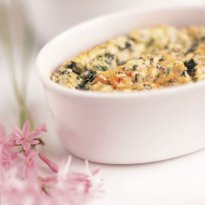
Spinach Goat Cheese Souffle


Spinach Goat Cheese Souffle with sauteed mushrooms, Mixed Greens and White Orange Vinaigrette

Serves 2-3
this is not a recipe you should attempt if you are unfamiliar with these techniques. A simpler souffle should be attempted first.
1 handful spinach
2 Tbs butter, plus some for greasing ramikans
2 Tbs flour
2/3 cup whole milk
7oz. goat cheese, crumbeled
2 egg yolks
4 egg whites
1/8th tsp cream of tartar
red pepper, brunoise
sauteed mushrooms
mixed greens
1 head frisee
white orange champagne vinaigrette
Preheat oven to 350 degrees F. Whisk egg whites and cream of tartar together until soft peaks form.
Heat the butter in a small saucepan over medium heat. Add the flour and cook just until the first signs of color start to appear. Slowly whisk in the milk, making sure there are no lumps. Bring to a boil, until thickened.
In a food processor, puree the spinach until smooth. Stir the spinach mixture in with the bechamel. Strain through a fine mesh sieve.
Reduce heat to a simmer. Remove from heat and add 5oz. of goat cheese, whisking until melted.
Slowly whisk the egg yolks into the bechamel sauce. Generously butter 6 (8oz.) ramekins. Place in a 9x13 baking dish.
Fold half of the egg whites into the souffle base. Then fold in the rest of the souffle base. Spoon mixture into the ramekins. Bake about 20 minutes until puffed and golden brown on the outside. serve immediately.
To Serve:
toss the mixed green and frisee with the vinaigrette.
Place 2-3 pieces of frisee on the center of the plate. Remove the souffle from the ramekin and place on top of the frisee. Place a small amount of tossed salad next to the souffle. Sprinkle with red pepper brunoise. Serve immediately.
For the Sauteed Mushrooms:
6 large shiitake mushrooms
1 medium bunch oyster mushrooms
2 Tbs clarified butter
1/4 cup heavy whipping cream
salt and pepper
Heat the butter in a medium skillet over medium high heat. Cook mushrooms until a slight crust forms on each side of the slices.
Add heavy cream, cook just until slightly thickened. Pour over goat cheese souffle to finish.

For the White Orange Champagne Vinaigrette:
1 large white orange
1/2 cup dry champagne
1 1/2 tsp white wine vinegar
3 Tbs grapeseed oil
1 Tbs shallot, finely chopped
salt and pepper
Using a peeler peel off 1/4 of the orange peel - just the peel, not the white part. Then, peel the orange so no white is showing.
With a sharp knife, cut 6 slices out of the peeled orange. Juice the rest into a small container.
combine the orange juice, orange peel and champagne in a small saucepan. Reduce to a thick consistency. Mixture should be very sweet and slightly bitter. Allow to cool.
Mix the orange-champagne syrup and vinegar. Taste, and add more vinegar if necessary.
In a small container with a tight fitting lid, combine the champagne-orange vinegar, shallot, salt pepper and oil. Shake until thoroughly emulsified. Serve immediately over greens.

Monday, January 16, 2006

Gastronaut


Monday, January 02, 2006

French Breakfast


I had some leftover oyster mushrooms that I needed to get rid of. I'd been planning this for awhile, so I'm really excited that I finally got to try it. This is from the old school but it's simple and elegant and would make a great dinner paired with a simple green salad. It may be a little boring but it's still good. The item in question:

Omlette with Oyster Mushrooms and Beurre Blanc makes 2 omlettes

6 eggs

2 cups oyster mushrooms

4 Tbs butter

1/4 cup finely diced shallot

1/2 cup white wine

3/4 ounce white vinegar

Using fresh eggs is very important, if you don't they will fall apart and not flip properly. Whisk the eggs in a mixing bowl, set aside. In a small saucepan heat the butter, until melted. Cook the mushrooms until browned and soft. Remove and set aside, season with salt and pepper. Add the white wine and shallots. Reduce until consistency is syrupy. Whisk in the butter until sauce is smooth and velvety. Pour the sauce through a fine mesh strainer and keep warm until ready to serve.

Make the omlette: Heat an 8" nonstick skillet over medium heat. Add a little oil or butter to the pan. Pour over half the beaten eggs. With a wood paddle or flat, heat-resistent spatula, stir vigorously for a few seconds, as if making scrambled eggs. Swirl the pan to even out the mixture. Continue to swirl the pan periodically, scraping down the sides. Using the spatula, loosen the omlette from the bottom of the pan, shaking it to make sure it's totally free. If you're feeling brave you can attempt to flip the entire omlette over to cook the top. If you do this, cook only a few seconds before plating. If you don't want to attempt the flip, lower the heat and wait until the top is fully cooked. This will take considerably longer.

To plate: Hold tilt the pan to slide out the omlette over the plate. When it's half out of the pan, use the spatula to fold the other half over, giving you the nice folded presentation. Do not attempt the tri-fold, it's too difficult.

For serving: You can do this one of two ways. 1) put the mushrooms in the middle of the omlette before folding, if you want them in the center and pour the sauce over the top. Or to showcase the nice shape of the mushroom 2) add the mushrooms back into the beurre blanc and toss to coat. Plate the omlette and pour the mushrooms and sauce over the top. Season with salt and pepper.

Steph found this a little bland and spiced it up with sambal oelek, which was very tasty and only mildly insulting to the chef.

If you wanna be really french you could serve this with wine. Breakfast is a little early for wine for me, but I couldn't resist.

TOO MANY SECRETS


Because I believe in progress, I want to share with you the recipe for - without hyperbole - the best bloody mary in the world. Any restaurant where I have any say in the menu will have this as a featured item. This recipe is not a science, I've never made it to specific measurements. If you try it, you might need to make a few test batches, adding a little of each ingredient at a time until you find something that works for you. It's based on me and steph's personal taste, so feel free to stray from these suggestions, just know you are tampering with perfection.

If you follow my sporadic postings you'll remember the pepper vodka post. This recipe rely's on a good homemade pepper vodka, which is great for martini's as well. I may have posted this recipe already but it's that good, you need to be reminded!

If you haven't made your own pepper vodka, don't even bother with this, it will just be another bloody mary. Don't be tempted by absolut's peppar vodka, it's spicy but has no pepper flavor which is truly what makes the drink.

Bloody Mary

1 1/2 ounces pepper vodka
8 ounces tomato juice
juice of half a lime
1/2 ounce white vinegar
worcestershire sauce
1/2 tsp celery salt
pinch kosher salt
corsely ground black pepper
garnish, olives, pickled asparagus, celery stalk

Pour the chilled vodka into a highball (or similar) glass or a wide bodied wine glass (I prefer this one). Pour the tomato juice on top. Add the worcestershire sauce and stir. I always base the amount on the color. Since steph loves worcestershire sauce I add enough to make it a dark dark red. When I make it for myself, I add it to a deep maroon. Either way you should add a little more than you think you need since it gives the tomato juice a wonderful 'meaty' flavor. Add the remaining ingredients and stir again. Add ice if desired and garnish.

variations could include, olive juice, horseradish, grated onion, sherry vinegar instead of white, lemon juice instead of lime.

Pepper Vodka
allow 1 week for preparation, it's worth the wait

750ml GOOD vodka, I like absolut but steph prefers finlandia, stoli would be good too -no smirnoff, philips or burnetts!
1 jalepeno
1 red jalepeno or fresno chili
1 serrano chili
2 cloves garlic, whole, peeled

Don't be tempted to replace any of the chilis with a spicier one, this recipe is perfectly balanced. I once made this using a thai chili instead of a serrano and the bloody marys upset my stomach. Also, don't forget the garlic, it provides an earthy foundation for the chili flavor and spice.

Pour a few ounces of vodka out of the bottle. Wash the chili's thoroughly. Slice each in half lengthwise and push into the bottle along with the garlic. Allow to steep at room temperature at least three days, 7 is optimal.

I prefer to refrigerate the vodka after infusion is complete, since you don't need to remove the chilis and the flavor is the best. You could also remove the chilis and store the vodka in the freezer. I find this tedius and difficult at best, also, you almost always end up spilling some and wasting the precious spirit. If you remove the chilis, discard them, they do not taste good.

A pepper is not a subtle fruit, its flavor is aggressive even when used for it's sweetness. For this reason I like it paired - as it usually is - with subtly flavored meats, chicken, pork, seafood, veal. My friend Gabe suggested serving the pepper vodka martini with a fish dish, which is an excellent idea that I intend to try at some point, possibly with the trendy and expensive sea bass.

Dirty Pepper Martini

1 1/2 ounces homemade pepper vodka
1/4 ounce dry vermouth
splash of olive brine

Pour into a shaker over ice. Shake and pour into a martini glass. Garnish with a jalepeno wheel

Thursday, December 22, 2005

Xmas drink


On choice few occasions its ok to drink in the morning, I consider xmas to be one of these. This seemed like a good drink:

2 ounces egg nog
1 ounce brandy
1 ounce godiva liquer
1/2 ounce vanilla schnapps

stir ingredients together in a glass with ice.

or if your looking for caffeine:

2 ounces espresso
2 ounces egg nog
1/2 ounce brandy
1 shot godiva liquer
1/2 shot vanilla schnapps

mix ingredients together.

In other news, I made chili last night. Its really easy because you only have to cut up and onion, chilis, and some garlic. Some recipes call for none of these which would make the preparation even easier. It turned out good. Here's what I did:

1 pound ground beef
1 pound ground lamb
1 pound ground pork
1 medium onion, diced
6 cloves of garlic, minced
4 jalepenos, cored, seeded and sliced
1 habenero, stem removed
1 Tbs salt
1/2 tsp cayenne
1/4 cup cumin
1/4 cup chili powder
1 tsp garlic powder
2 cans red kidney beans
1 can canellini beans
2 15oz cans tomato sauce
16 oz tomato paste
2 cans diced tomatoes with liquid
1 bottle new zealand lager, 12oz

brown the meat and drain, reserving the liquid. Seperate the fat from the juices and discard.

Saute the onions in the oil until golden, add the garlic, chilis and spices and cook another few minutes until fragrant. Add the tomato paste and cook another minute. Add the tomatoes, tomato sauce and beans and bring to a boil. Add the meat and juices and the beer. Simmer 30-45 minutes and serve!

Monday, December 19, 2005

Roast Pork Tenderloin with Sweet Potato Hash and Yellow Pepper Compote


The inappropriateness of this image should illustrate my frustration at my inability to continue serious photography. I was sabotaged since I moved here. I no longer have access to lighting equipment, light metering equipment, cheap developing and film scanner. On top of which all my fujifilm somehow vanished in the move. I'm looking into a digital camera since its economically the best way to go.

In other news I made a nice pork dish the other night and added white wine to everything. In retrospect, it would have been better to periodically baste the roast with the wine instead of adding it to the jus reduction. This was a little to complicated in the combination of flavors. The sauce and the starch clash in differing sweetnesses and the It's incomplete as a full meal in that it lacks a vegetable, to which I have no suggestion. My reasoning was as follows:

1 the pork was cooked without any flavor as a blank canvas, leaving greater possibility for complexity of sauces.
2 lean white meat with subtle flavor is often paired with sweet items. I love the combination of sweet and spicy where peppers also excell - yellow as sweet and chipotle as spicy.
3 who doesn't like peppers and pork together?
4 I have no idea what vegetable would go well with this

It's extremely good. Could be served family style as well as plated for guests or an intimate dinner for two. Steph liked it a lot.

Roast Pork Tenderloin with Sweet Potato Hash and Yellow Pepper Compote

1 bone-in pork loin (about 5-6 pounds)
olive oil
salt and pepper

Preheat the oven to 350. Rub the pork loin with oil and roast to 135 internal temp. While the pork is cooking, prep the ingredients for the sweet potato hash and the compote. Remove the pork from oven and cover with aluminum foil.

While the meat is resting, make the potato hash and yellow pepper compote simultaneously. When ready, slice 1 inch pork chops off the loin using the ribs to help guide your measurement.
Drain off the pan juices. Seperate out the fat and add to the same pan over the stovetop over medium heat. Reduce down to by 75% of original volume. You can add the sauvignon blanc during this as well.

For the Yellow Pepper Compote:
4 yellow peppers, small dice
1 large shallot, small dice
1 1/2 tsp thyme, chopped
4 Tbs butter
2 tsp salt
1/2 cup low sodium chicken broth
1/4 cup sauvignon blanc
salt and pepper

Heat the butter in a medium saucepan. Cook the shallots and peppers for 5 minutes over low heat. Season with salt and white pepper. Add the white wine and cook 3-5 minutes until the alcohol cooks off. Lower the heat to a simmer and reduce

For the Sweet Potato Hash:
1 large sweet potato medium dice
2 Tbs olive oil
1 1/2 tsp. chipotle finely minced w/some adobo sauce
1 Tbs sauvignon blanc
3 Tbs pure maple syrup
salt and pepper

Make this last because it cooks very fast and must be served hot. Heat the olive oil in a skillet. Add the chipotle and cook 1 minute. Add the sweet potatoes and stir through. Season with salt and pepper. Cook 1-2 minutes and add the white wine. Cook just until the wine is cooked out and potatoes are cooked through. Add the maple syrup and stir until potatoes are evenly glazed. Serve immediately.

For Plating:
spoon a small amount of potatoes on the plate into a mound. Rest pork chops on the potatoes with the bone up. Spoon a small portion of pan jus over the top. Top with a little compote and serve.

Monday, November 28, 2005

I pity the foo...


Who doesn't like butternut squash soup!

Regretably I didn't take this picture because I'm too busy eating this soup. Sure, you can make it with cumin, lime, ginger, curry and god knows what, but I prefer NOTHING.

I got one of these delicious squashes before thanksgiving and just haven't decided what to do with it. It would never have been as good as this if I tried to cram as much mise en place as I could in.

I decided I wanted to make a soup on my way home from work and I didn't want to spend all night doing it. I'm impressed with myself that I was able to bang it out in about half an hour with half of that simmering time. Everything is about this recipe is designed to make it quick cooking.

I originally roasted the squash to develop some of those declicious dry heat sugars, but it ended up saving me time since it was already cooked when I added it to the soup. The smoky bacon gives it great body and goes so well with the roasted squash making it hearty and earthy. It has an amazing velvety consistency and is perfect in the cold november rain. I highly encourage anyone to make this, but it's a very small recipe so double it if it's for more than one person. Since there's no cream in it it will keep for a long time in the fridge and reheat well.


Roasted Butternut Squash Soup
serves 2

1 1/2 tsp bacon fat (I had some in the freezer but if you cook bacon for it, crumble it over the top for garnish)
1-2 Tbs olive oil
1/4 medium onion, small dice
1/2 medium-small carrot, brunoise (1/8" dice)
1/4 celery stalk, brunoise
1 1/2 cloves of garlic, minced
1 sprig of rosemary
1 sprig of thyme
1/2 medium butternut squash, peeled and sliced into 1/2 inch thick pieces
3 cups chicken stock
salt and pepper

Preheat the broiler to it's highest heat, broil. Rub the squash slices with olive oil. Place on the highest rack, closest to the heat source. Flip the squash when it starts to brown lightly, careful not to burn it.

I used the time the squash was cooking to cut up the rest of the ingredients.

Heat the fats in a soup pot over medium heat. Add the garlic, onions, carrot, celery, rosemary and thyme and season liberally with salt and pepper. Sweat the ingredients five minutes or so until softened and aromatic, stirring frequently. If you wanted to add a splash of white wine at this point you could and let it cook off for a minute.

While the mirepoix is sweating, cut the roasted squash into a small dice, trimming off any burnt edges.

Add the stock and bring to a boil. Add the squash and bring down to a simmer. Cook 15 minutes. Remove thyme and rosemary sprigs and blender with a stick blender until smooth. Check for seasoning adding more salt and pepper as necessary. Serve immediately or refrigerate for up to a week. Also very good cold. Garnish with crumbled bacon.

Sunday, November 27, 2005

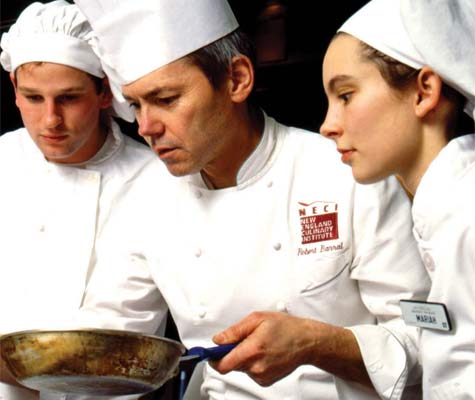
Culinary School


these guys are confused and concerned.

Not much to comment on. I'm finally going back to work after my nearly week long hiatus. I can finally stop pretending to be a cook. I'm trying to write my application essay for culinary school. This paragraph didn't make the cut:

Rafael, the chef de partie, my first real culinary mentor and source of all my stress and anxiety at the kitchen where I work, said it more poetically through his thick south-mexican accent than Brillat-Savarin ever could have, "If I could not work with food, I would die of sadness." It was causally spoken without great thought or intention and might have been heard by no one other than myself, but this was the first time I ever felt connected to my coworkers. How could I? I had yet to prepare a dish without almost constant supervision, my knives were often dull and improperly honed, my battonet's too small, my julienne too big and all of them inconsistent and these were seasoned pros. I was, and still am, green as any blanched vegetable and clumsy and awkward at best in the kitchen. But Rafael might as well have been speaking for the entire culinary team with his accuracy and conciseness that somehow explained our devotion to a job that paid poorly, consisted of long and odd hours and lead others to search for a history of mental illness in the family. I knew I was at home.

Steph thought, and I agree, it's good but not something that admissions boards would take particular delight in and I need to realize I'm not Bourdain. :-P I still like it but need to tone it down. In other news, I'm about half way through Kitchen Confidential and it's really good. I highly recommend. Someone buy me a copy the The Silver Spoon for the holidays!

Thursday, November 24, 2005

THANKSGIVING


I love thanksgiving so much I manage to have it twice each year. Usually a traditional one and the other less formal. This year my parents came out for a few days with my sister. I brined a turkey with turkey stock I made weeks earlier. Unfortunately the turkey got overcooked and any benefits were lost. :-( The usual suspects were found hanging around the turkey: mashed potatoes with roasted garlic and bacon, stuffing with sage, and turkey stock, gravy and cranberry compote. I wanted to do something different with the sweet potatoes so I made biscuits with them using a recipe I found on food network. They had a great orange color and were delicious, but didn't quite rise, a never ending problem with my biscuits. I found a recipe for that looked amazing so I made that as well; it was all we hoped for. Desert was a pumpkin creme brulee also from the food network website. I was made very similar to a pumpkin pie but then strained for a smooth custard. The whole thing was quite satisfactory.

Tonight we decided to give the old bird a rest and roast a leg of lamb. Using the same recipe from the post "leg of lame? NO!" but tweaked a little. It's an amazing roast rubbed with a garlic-rosemary-anchovy paste and roasted to a nice rare and served with a parsley mint pesto.

This meal was mostly planned by Steph while I was stressing the details of my parents visit. It included a classic oyster-cornbread stuffing, recipe courtesy of food and wine. It was a little wet from too much stock, but still very tasty. We planned on doing a deep fried okra, but decided it was better for tomorrow. The best part I owe entirely to Steph because I would not have made it without her insistence. It's her favorite so it wouldn't have been thanksgiving without: Green bean casserole. It was actually incredibly simple with a disproportionately delicious yield. I took the ramekins leftover from the creme brulee and filled them with a mixture of raw green beans cut into 1" pieces and grated fontina cheese, poured over some leftover cream of mushroom, topped with a little more fontina and baked until the cheese got some nice color on top. The individual casserole idea originally started out as a cute way of serving a revamped classic but evolved into necessity with all of our oven dishes in use at the same time. I would definitely make these again. My advice is make the mushroom soup, you won't be dissapointed. Then if you like, make the little casseroles if you're in a pinch, it'll turn out, trust me.

For desert we had another unforgetable classic: pumpkin pie. I wanted to make the crust but steph insisted on buying some. Another excellent thanksgiving for the books. Thanks everyone!

Sunday, November 13, 2005

Chinese Steamed Dumpling


The nice thing about these is how incredibly easy they are to make. You can make the filling up to a day ahead. It's a little time consuming and unless you have a multi-tiered steamer, you'll end up doing at least 5 batches, but they're well worth it and it's almost impossible to screw up. I like serving these dim sum style with a little bit of soy sauce and sambal for dipping. You could also make a big batch and then freeze them to eat at your convienence.

I was walking through the local town and country the other day looking for inspiration. I was truly at a loss for what I felt like eating. I spied a package of ground pork and knew immediately, that this was perfect.

That night I actually ended up making a muffaletta because steph had mentioned wanting one and it had been a little while. So I made these the next day on my friday with stir-fried broccoli and carrots.

Chinese Steamed Dumpling

1 lb ground pork
3/4 pound ground shrimp, or chopped with a sharp knife or food processor
1 Tbs garlic, finely chopped
1/2 Tbs ginger, finely chopped
1 1/2 cup shredded napa cabbage or green onions or both
1 tsp sesame oil
1 tsp salt
1 egg white
1 package square wonton wrappers
napa cabbage leaves for steaming

Combine all ingredients except the wonton wrappers in a bowl and mix thoroughly. Refrigerate up to overnight.

fill a small bowl with water and place within reach. Spoon 1-2 tsp of filling in the middle of each wonton wrapper. keep the amount of filling consistent so cooking times will be the same.

Dip you index finger in the water and lightly wet two corners of the wonton. Fold all of the corners together at the top of the wonton making the dumpling. Place on a sheet pan and repeat.

Cover the wontons with a damp paper towel to prevent to tops from drying out.
Line the steamer with bamboo leaves and steam for 5-8 minutes or until cooked through. Serve immediately.

Wednesday, November 02, 2005

Cutlery metallurgy is a big interest of mine, though I still know very little about it. I have however, learned some important things to look for when considering a kitchen knife.
All knives are different and have different metallurgies. A sword for example, requires a softer steel so it won't shatter on impact. Since this is not an issue with a kitchen knife, hardness is the bottom line. If you happened to catch my earlier post regarding the henckels ceramax line, you'll know that steel hardness is measured using the rockwell scale. The unit is a degree.
Unfortunately, steel is a relatively soft metal. To harden it, knife makers add carbon to make 'carbon-steel.' However carbon-steel knives require more maintainence and are highly susceptible to tarnish and rust. For these reasons carbon-steel knives have lost popularity in the kitchen and have become difficult to find, even though they are sharper than any other knife. The most popular knives today are high-carbon steel knives or HCS. These knives are made by adding elements like, chromium, vanadium, nickel, cobalt and others to decrease the corrosive properties. This negatively effects the sharpness of the knife so manufacturers are constantly trying to find new ways around this tradeoff with different metallurgies and processes.

Any serious knife maker will drop forge their knives. Forging changes the atomic structures and creates a harder, longer lasting knife. Chef's knives, vegetable knives, bread knives and paring knives should always be forged. Boning knives, some slicers and other thin bladed knives benefit from being stamped, because they are always thinner than their forged counterparts.
Ceramic blades are very sharp but often cannot be resharpened and break and chip very easily.
Blade hardness usually means a sharper edge and longer edge retention. However, it's not the only thing that matters. Because most popular knife makers use very high quality steel (which you definitely pay for) as well as state of the art processes, most knives are 56-58 degrees rockwell. What I mean is most blades are comparable as far as strength and hardness and personal taste comes into play. Professional chef's don't all use the same brand of knives. The best knife is one you'll use often for many different tasks that fits comfortably in your hand. The new Henckels line boasts the highest rockwell of any other kitchen knife, however the handle is shaped and weighted in a way I find uncomfortable, making is useless to me.
Blade length is also important, chef knives, slicers and bread knives are completely useless when too short, the way a paring knife is when too long. A chef's knife is also useless when too long. I find using myself poking into other things and running off the board when using my 10" chef knife at home.

Don't get seduced by fancily shapen blades. There are four basic knives essential in every kitchen. They are:

a good Chef/Cook's Knife - 8-10 inches. This is your all purpose knife used for for anything from boning chicken to cutting vegetables. This is the most valuable knife in your collection and should be the nicest. A well made knife will easily last a lifetime properly taken care of. 8" is usually ideal for the home cook. Any shorter is worthless). Most professionals find anything longer than 10" to be cumbersome for home use. My problem with the chef's knife is the 10 ones are too heavy for lighter work like mincing herbs, cutting fruit etc. But the 8 inch is too short. One of the guys I work with has gotten around this problem with the global 8 1/4" carving knife. Because it's made for slicing, the blade is thinner and light. Global has a habit of making their blades wider than other brands, so it makes sense that the carving knife be just right for light chef knife work. One drawback is that it's not forged, and will probably not keep and edge as long.

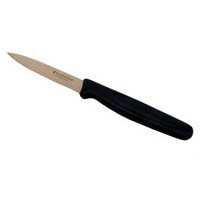
Straight Paring Knife - 3-4 inches. There are many different styles, but this is the most useful.
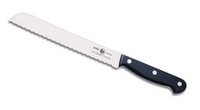
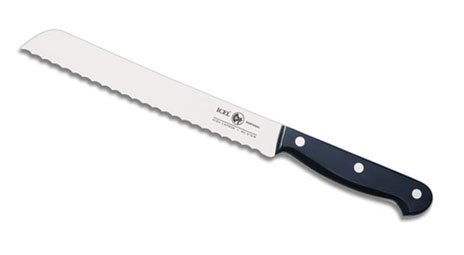
Serrated Bread Knife - 8-10 inches. I personally prefer the round as opposed to pointed tip because it cuts through though crust better.

Secondary knives include:

Slicer - 8-12 inches. Length is important because many items being sliced greatly benefit from a single motion and can be damaged by sawing.
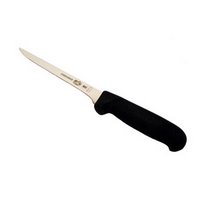
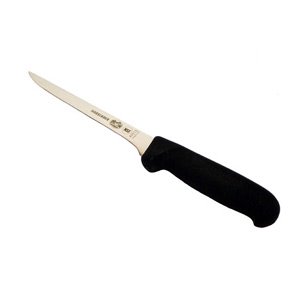
Boning Knife - should have a thin blade, preferably stamped
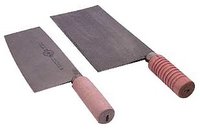
Chinese Cleaver - chinese chefs use these as you would a western style chef's knife. Heavy blade works great for cutting through bone and smashing garlic and ginger.

Meat Slicer with a granton edge. Thin blade and "scallops" cut down surface friction.
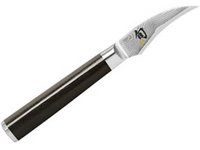
Bird's Beak Peeler/Paring Knife - extremely useful for peeling and small or decorative cuts.

Many different asian styles have become popular in recent years. They take the place of western style blade and can easily be swapped out for their western counterparts. These knives are very beautiful and include:
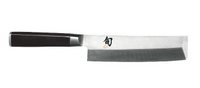
Chinese Vegetable Cleaver - Usually single beveled, which means the edge is ground on only one side producing a very sharp edge. Often used in place of a chef's knife, though bad for cutting through bone.
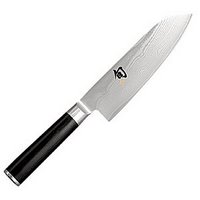
Santoku Knife - 6-7 inches. Thin bladed Japanese vegetable knife. Often used in western cooking as a chef's knife, though not designed for cutting meat or bone.
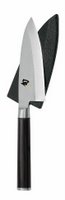
Deba knife - a heavy duty, all purpose knife. Single beveled. Japanese chef knife great for cutting off fish heads. Properly used in place of a western style chef's knife. similar to a santoku
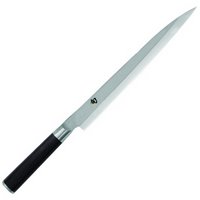
Sashimi Slicer - 10-12 inches. Takes the place of a regular slicer. Designed for more delicate items: fish, sushi, etc.

Since I'm a big geek and japanese knives are extremely beautiful, I plan to put together a set of professional set of them. this would include:

Yanagiba or Takohiki 300mm
Nakkiri 180mm
Kurouchi Mioroshi Deba or Usuba 180mm
Kurouchi Santoku 180mm
Mukimono 105mm
Makiri 75mm

Shun knives are really good, but they're almost more a work of art than a tool. Also, the ebony handles fade when washed with regular dish soaps.

Stay away from specialty knives like, tomato knives and salmon slicers, they take up space and are mostly useless. Any good serrated knife will cut a tomato as well as a tomato knife.

Brands I've found to be popular among professionals include but are certainly not limited to knives from either Solingen, Germany or Seki City, Japan (the knife capitols of the world.) Among these, Wusthof, Global and Messermeister are extremely popular and all rate 56-58 HRC.

One final note. No knife blade is as hard as glass or ceramic, which is why cutting on these surfaces destroys the edge. You should never under any circumstance cut on these surfaces, especially when using a high quality knife. A tight grained wood cutting board is the best surface. Properly maintained wood is more hygegnic than poly or plastic boards because knives cut grooves in plastic that cannot be cleaned. Knives need to be honed often to re-align the edge. Use a fine-ceramic or diamond embedded steel to hone your knife. Regular steels can actually strip metal from the blade and wear down the edge. They are also not hard enough to properly hone a knife. And if you use these knives in the dishwasher, take one out and KILL YOURSELF with it.